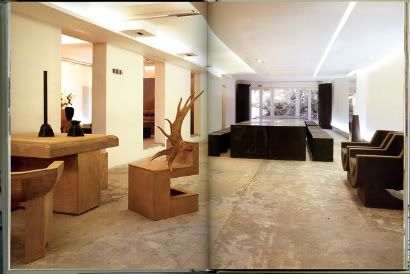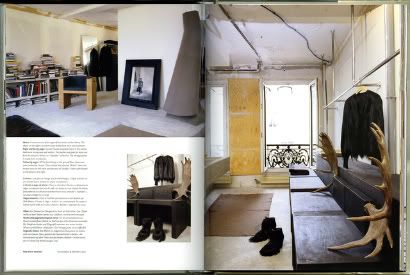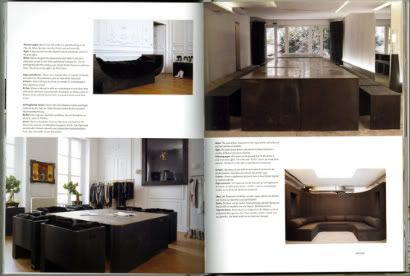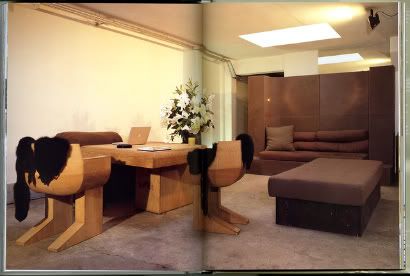
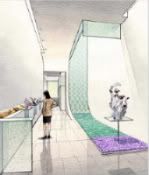
Renderings and interior illustrations always amaze me. I've drawn almost all my life so, as an interior design major, I view rendering as an important artistic outlet. Rendering adds a personal touch and a uniqueness that could never be achieved through the use of a modern computer.
I commonly get to do presentation renderings at my current interior design internship at HDD, but I still definitely want to improve my rendering skills, it's one of my major goals. I have noticed an improvement just through the work i've done at HDD, but I've also been meaning to sketch as much as I can....which I have not been doing a good job of. As I was thinking of other ways I could improve my rendering skills, it came to me. I knew I needed to research artists and emulate the ones that make me think "I want to be able to do that!". I decided to take it one level further and try to catch an interview (via email) with these amazing renderers. This is not only a great learning experience for me but I hope to help out my readers as well. And so I introduce to you my first renderer interviewee...Paul Maguire:


What is your name?
What is your name?
Paul Maguire
What company are you involved with?
No company, I work independently.
How did you get involved with interior renderings?
I got involved with a small design office run by one of the instructors at the Cleveland Institute of Arts, where I attended school. I had some friends working there, and they encouraged me to get involved. I taught myself to do perspective drawings, then interviewed for a freelance job. After 3 years I moved to New York, and have been working in the field ever since.
What materials do you commonly use?
Pencil, prismacolor, watercolor.
What is your favorite medium to work in?
Pencil
What is your favorite rendering tip/secret?
Practice, practice, practice.
What do you find to be the most difficult part or rendering?
Each rendering offers its own unique challenge. I think the most difficult task is to convey the spirit of a place, rather than just the details. In addition to the architecture itself, the activity within the space and the lighting are the most important.
What has been most beneficial to your rendering skills (classes, books, experimentation, etc.)?
Looking at and emulating the work of artists I admire. Watching them work when I'm able. Instructional books are almost no help.
Do you have any advice for students that want to improve or pursue rendering?
Do as much drawing as possible. Sketch all the time. Experiment. Challenge yourself.
Anything else you would like to say?
Drawing skills are still highly valued in architecture and design at present, even with the ubiquity of the computer. Designers with good drawing skills are never out of work, and also seem to be the most talented at design. I believe an ability to sketch one's ideas clearly shows a basic understanding of form, which leads to a solid design sensibility. Even in the fields of animation for film and video games, the initial concept work is done by pencil artists. Computers do mostly finish work. If you must use a computer for your illustrations, use it as a tool rather than a solution.


Photo Credits: www.maguirender.com